

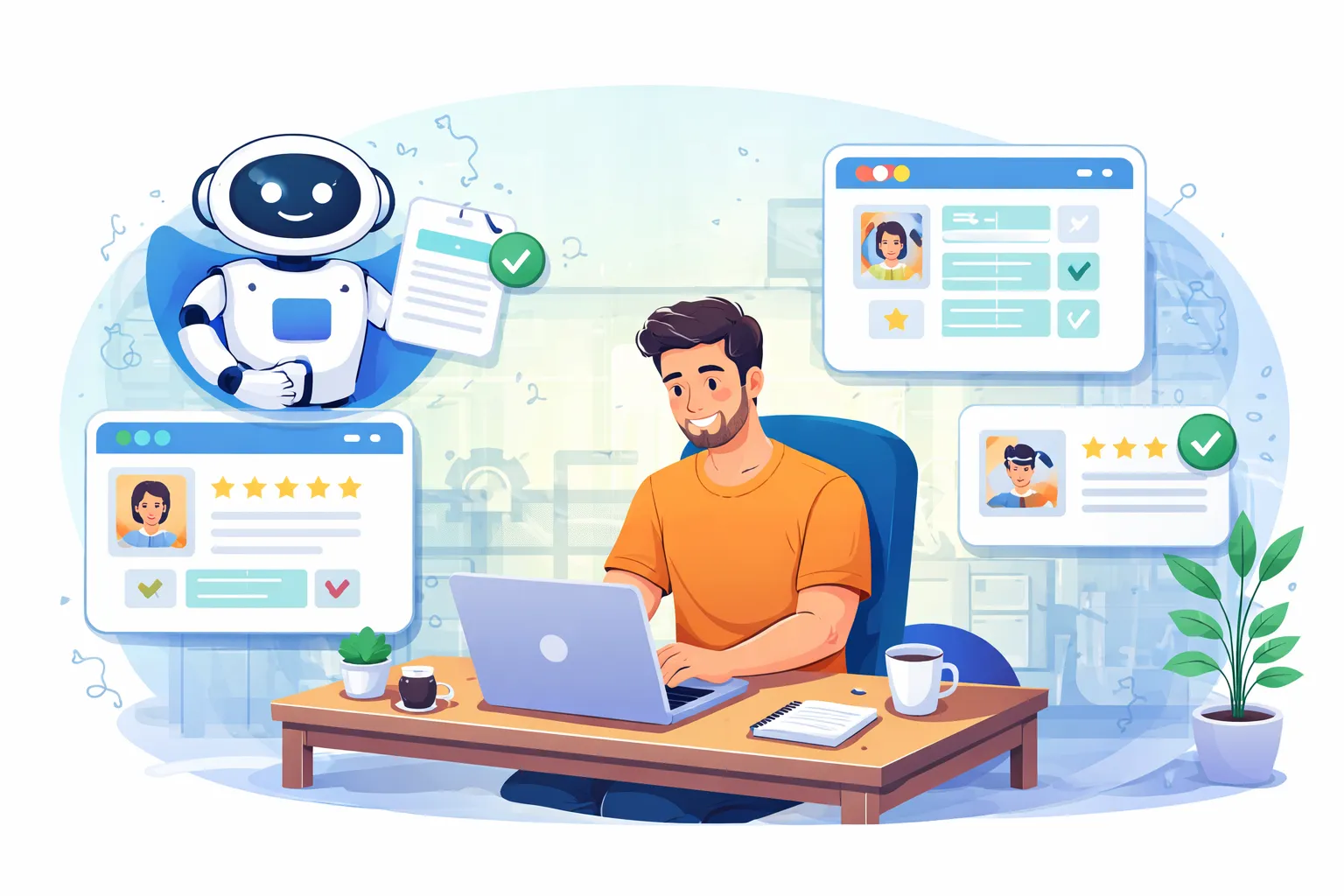
You're drowning in leads you don't have time to qualify.
Every form submission sits in your inbox for hours—sometimes days—while you're heads-down building product, talking to existing customers, or just trying to keep the business alive. By the time you respond, the prospect has moved on or your reply lands with all the urgency of a forgotten voicemail.
You know some of these leads are gold. Others are tire-kickers, students doing research, or competitors poking around. But you can't tell which is which without spending 20 minutes on each one. And as a solo founder, you simply don't have 20 minutes to spare.
This is the lead qualification bottleneck—and it's costing you real revenue.
The good news? AI agents can handle this entire process for you. Not someday. Not with a massive budget or a technical co-founder. Right now, with tools that are simple enough to set up over a weekend.
This guide will show you exactly how solo founders can automate lead qualification using AI agents—without losing the personal touch that converts prospects into customers.
What Is an AI Agent? (No Jargon, Just Results)
An AI agent is software that acts on your behalf. Think of it as a tireless assistant that never sleeps, never forgets, and follows your instructions exactly.
Unlike basic automation tools that just move data from point A to point B, AI agents can:
Collect information from multiple sources (forms, emails, chat, CRM)
Make decisions based on rules you define or patterns they learn
Take action automatically—send emails, score leads, book meetings, update your CRM
The key difference: autonomy. You set the parameters once, and the agent handles the repetitive work without you babysitting every step.
For lead qualification, this means an AI agent can engage with a prospect, ask the right questions, determine if they're a fit, and route them to the appropriate next step—all while you're building features or sleeping.
You're not hiring a salesperson. You're deploying a system that scales your judgment.
Why Traditional Lead Qualification Fails Solo Founders
Manual lead qualification breaks down fast when you're the only person wearing the sales hat.
Slow response times kill deals. Research shows that responding to a lead within 5 minutes makes you 100x more likely to connect than waiting an hour. When you're solo, "5 minutes" is a fantasy. You're in a customer call, fixing a bug, or finally eating lunch. By the time you circle back, your competitor already replied.
Inconsistency breeds missed opportunities. On Monday, you're optimistic and qualify everyone. By Friday, you're burned out and rejecting anyone who doesn't fit your exact ICP. Your criteria shift with your mood, which means you're leaving money on the table or wasting time on bad fits.
Manual follow-ups don't happen. You tell yourself you'll check back with that "maybe" lead in two weeks. You won't. It gets buried under product launches, support tickets, and everything else demanding your attention.
Subjective judgment wastes time. Without a clear system, you re-evaluate the same qualification questions every single time. "Do they have budget?" "Are they the decision-maker?" "Is this a real project?" You're solving the same puzzle on repeat instead of building your business.
The result: lost revenue, founder burnout, and a pipeline full of uncertainty.
What Lead Qualification Should Look Like for a Solo Founder
Forget enterprise sales playbooks. You don't need a 47-step process with lead stages named after precious metals.
Here's what good lead qualification looks like when you're running solo:
Fast. Leads get a response within minutes, not hours. Speed builds trust and captures attention while it's hot.
Consistent. Every lead is evaluated against the same criteria, regardless of whether you're having a good day or drowning in chaos.
Automated. The system handles data collection, follow-up questions, and initial scoring without your involvement.
Actionable. Qualified leads land directly on your calendar. Nurture-worthy leads go into a sequence. Clear rejections get a polite "no" and stop wasting your time.
Simple. You should be able to explain your qualification process in under two minutes. If it requires a flowchart, it's too complicated.
The goal isn't perfection. It's leverage. You want a system that frees up 10-15 hours per week while maintaining—or improving—your close rate.
Key Tasks in Lead Qualification That AI Agents Can Automate
Lead qualification isn't one task. It's a sequence of micro-decisions that currently live in your head. AI agents can handle each step:
1. Capturing lead data
When someone fills out a form or starts a chat, the AI agent logs every detail—company name, role, email, source. No more copy-pasting between tabs.
2. Asking follow-up questions
Instead of accepting whatever sparse information a prospect volunteers, the agent asks clarifying questions: "What's your current process for [X]?" or "What's your timeline for making a decision?" It does this naturally, through chat or email, without feeling like an interrogation.
3. Scoring and tagging leads
Based on their answers, the agent assigns a qualification score and tags them by fit, urgency, or vertical. A SaaS founder gets leads tagged as "high-fit enterprise" or "nurture—too early stage." A consultant gets "ready to book" or "needs case study first."
4. Routing leads to the right action
Qualified leads trigger a calendar booking link. Mid-tier leads enter a nurture sequence. Clear mismatches get a polite rejection and suggested alternative resources. The agent decides and acts—you just show up for the calls that matter.
This all happens asynchronously. While you're shipping code or talking to a customer, your AI agent is qualifying the next five leads in parallel.
Designing Your Lead Qualification Criteria (Keep It Minimal)
AI agents are only as good as the rules you give them. Garbage criteria in, garbage results out.
Start with 5–7 qualification criteria max. More than that and you're overthinking it. Here's a framework:
1. Company size or revenue band
Are they too small to afford you? Too large to move fast? Define your sweet spot.
2. Decision-making authority
Can this person sign a contract, or are they doing research for their boss? You want to talk to buyers, not researchers.
3. Budget awareness
Do they know roughly what solutions like yours cost, or are they expecting a $50/month tool when you charge $5K? Misaligned expectations waste everyone's time.
4. Timeline
Are they evaluating now, or "just exploring" with no urgency? Urgency determines prioritization.
5. Use case fit
Does their problem match what you solve? If they need feature X and you only do Y, it's a mismatch no matter how qualified they seem otherwise.
Disqualifiers:
Students, competitors, or people asking for free work
Industries you don't serve
Deal sizes below your minimum viable engagement
High-intent signals:
Specific product questions
Mention of budget or timeline
Multiple touchpoints (demo request + email)
Write these down in plain language. Your AI agent will use them to make decisions, so clarity matters more than sophistication.
How AI Agents Collect and Enrich Lead Data
Most leads arrive incomplete. Someone fills out a form with just a name and email, leaving you to dig up the rest. AI agents fix this by collecting and enriching data automatically.
Data collection:
The agent pulls information from wherever the lead originates—website forms, chatbots, email inquiries, CRM integrations. It consolidates everything into one record so you're not hunting across tools.
Smart questioning:
Instead of front-loading a 15-field form that scares people off, the agent asks questions conversationally over time. First interaction: name and email. Next message: "What problem are you trying to solve?" Follow-up: "How are you handling this today?" The friction stays low while the context builds.
Automatic enrichment:
The agent can cross-reference databases or enrichment tools to fill in missing details—company size, industry, tech stack, funding status. If someone from "Acme Corp" submits a form, the agent looks up Acme's employee count and revenue band without bothering the prospect.
The result: you're not asking leads the same basic questions manually. You're starting every conversation informed and ready to add value.
Automating Conversations With Prospects (Without Sounding Like a Robot)
The fear with AI agents is they'll sound robotic and turn prospects off. That's a real risk—if you set them up badly.
Done right, AI agents can have natural, helpful conversations that feel responsive and personal. Here's how:
Use conversational language. Skip the corporate speak. Instead of "We would be delighted to learn more about your requirements," try "What are you trying to solve right now?" Write the way you'd actually talk.
Ask one question at a time. Don't overwhelm prospects with a wall of text. Fire off one focused question, wait for the response, then ask the next. It mirrors real conversation.
Personalize based on context. If the lead mentioned a specific pain point in their form submission, reference it: "You mentioned struggling with manual follow-ups—what's your current process?" This shows the agent is paying attention, not just templating.
Set expectations early. Be upfront that they're talking to an AI agent initially: "I'm Claude, an AI assistant helping [Founder Name] qualify leads. I'll ask a few quick questions so we can get you the right help." Transparency builds trust.
Know when to hand off. If a prospect asks a question the agent can't answer or expresses frustration, escalate to you immediately. Don't let the AI try to fake its way through.
Speed and consistency matter more than perfection here. A prospect would rather get a helpful reply in 3 minutes from an AI than wait 6 hours for you.
Lead Scoring and Decision-Making With AI
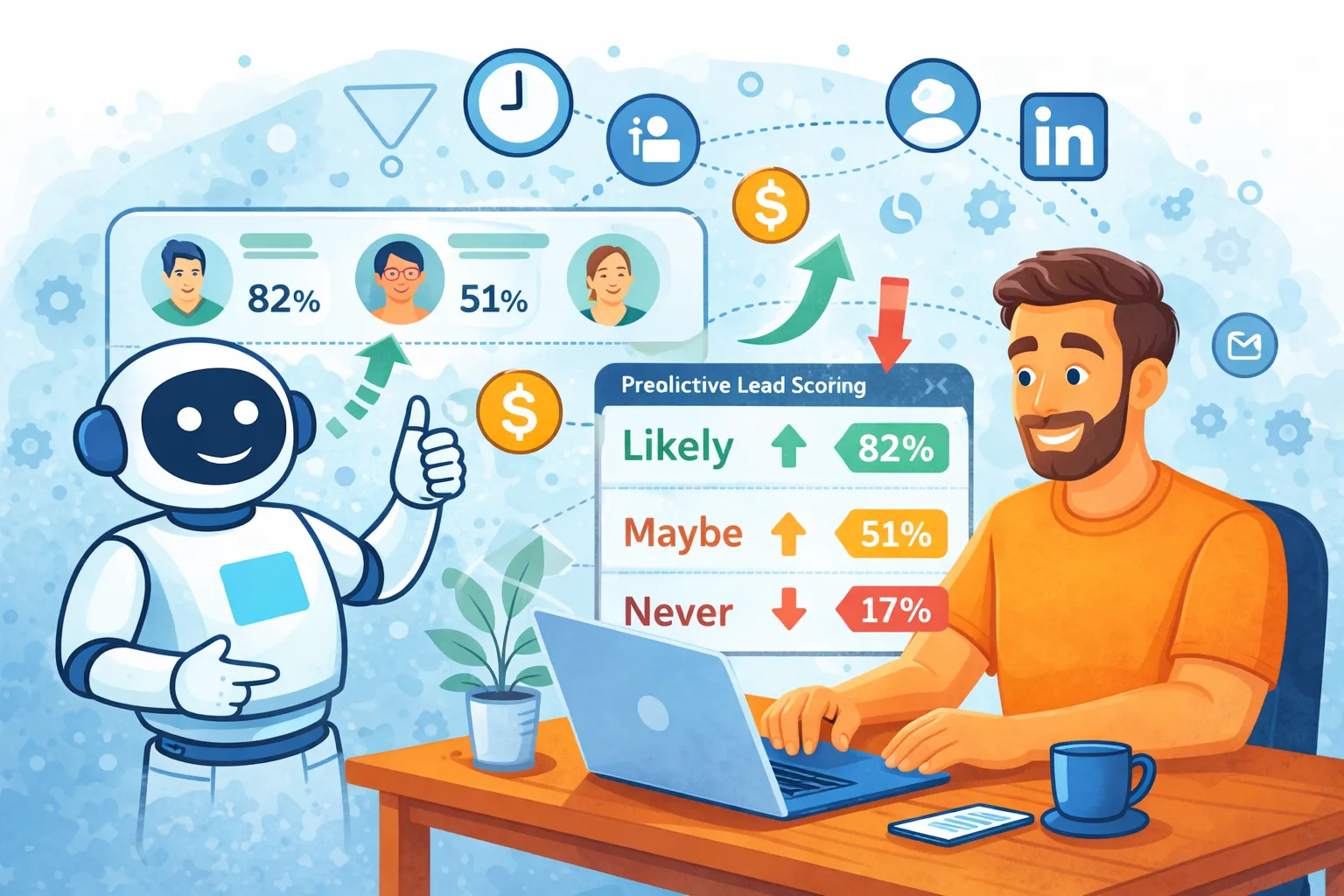
Once the AI agent has collected data and asked qualifying questions, it needs to make a decision: Is this lead worth your time right now?
There are two approaches to scoring:
Rule-based scoring (simple and transparent):
You define explicit if/then logic. "If company size > 50 employees AND role = decision-maker AND timeline = within 3 months, then score = qualified." "If budget = unknown AND timeline = just exploring, then score = nurture."
This is deterministic. The agent applies your rules exactly, every time. It's easy to audit and adjust. Best for solo founders who want full control and have a clear ICP.
AI-assisted scoring (pattern recognition):
The agent analyzes past leads that converted (or didn't) and identifies patterns. Maybe leads who mention specific keywords convert at 3x the rate. Or prospects from certain industries consistently waste time. The AI learns from outcomes and adjusts scoring weights.
This requires more data to train on and less immediate transparency, but it can surface insights you'd miss manually.
Most solo founders should start with rule-based scoring. It's faster to set up and easier to trust.
The decision tree:
High score = Sales-ready. Auto-book a call or send a personalized meeting invite.
Medium score = Nurture. Add to an AI Email Nurture Sequence for Mid-Score Leads or Slack yourself a note to follow up in two weeks.
Low score = Polite rejection. Send a kind "not a fit right now" email with helpful resources, then archive.
The agent executes the decision automatically. You only see the leads that crossed your qualification threshold.
Routing Qualified Leads Automatically (So You Only Show Up When It Matters)
Qualification without action is just data collection. The real leverage comes from routing—getting qualified leads to the right next step without your involvement.
Auto-booking calendar slots:
When a lead qualifies, the AI agent sends a message like: "Great! Sounds like we can help. Here's my calendar—grab a 30-minute slot that works for you." It embeds your scheduling link (Calendly, Cal.com, etc.) and books the meeting directly.
No back-and-forth emails. No "what times work for you?" tennis matches. The lead schedules, you show up.
Personalized follow-ups:
Not every qualified lead is ready to book immediately. The agent can trigger a tailored email sequence based on where they sit in the scoring model. High intent but unclear timeline? Send case studies and a soft nudge. Clear fit but needs buy-in from their team? Share ROI calculators or implementation guides.
CRM and pipeline updates:
The agent logs every interaction, updates lead status, and creates tasks automatically. If you use a CRM, qualified leads appear with full context—conversation history, score, next steps. If you're using a spreadsheet or Notion, the agent writes rows so you can review weekly.
Disqualification with grace:
For leads that don't fit, the agent sends a respectful decline: "Thanks for reaching out. Based on what you've shared, we're not the best fit right now—but here are some resources that might help." You're closing the loop professionally without spending your time on dead ends.
The pattern: qualify, decide, route. The agent handles all three. You preserve your time for high-value conversations.
Tools and Stack Options for Solo Founders
You don't need a Salesforce instance and a six-figure Zapier bill. The right stack for solo founders is lightweight, affordable, and connects easily.
AI agent platforms:
Look for no-code or low-code platforms that let you build conversational agents without engineering a custom solution. Many integrate directly with your website, email, or CRM. Prioritize platforms with built-in lead qualification templates—you can customize them instead of starting from scratch.
CRM or lightweight databases:
You don't need enterprise-grade CRM. A simple tool that tracks contacts, stores notes, and segments leads by score is enough. Some founders run everything in Notion or Airtable. Others prefer a lightweight CRM with native automation. Pick what you'll actually use.
Calendar and email tools:
Your scheduling tool should integrate with your AI agent so booking happens in one click. Your email platform should allow the agent to send on your behalf (with proper authentication) for follow-ups and nurture sequences.
Integration glue:
Most AI agents connect to other tools via APIs or automation platforms. Make sure your agent can talk to your form builder, CRM, and calendar without custom code.
What to avoid:
Don't layer on 10 different tools in week one. Start with an AI agent platform and a place to store lead data. Add complexity only when you hit a clear limitation.
The best stack is the one you'll actually maintain.
Common Mistakes Solo Founders Make With AI Automation
Automation can backfire if you set it up carelessly. Here are the traps to avoid:
Over-automating too early:
You've qualified five leads manually, and you're already building a 20-step AI workflow. Slow down. You need to understand your qualification process yourself before delegating it. Run things manually for at least 10–20 leads so you know what works.
Vague qualification criteria:
"Good fit" isn't actionable. "Company size 10–500 employees, B2B SaaS, timeline within 90 days" is. If you can't explain your ICP clearly, your AI agent can't execute it.
Letting the AI sound robotic:
Default AI agent templates often sound stiff and corporate. Rewrite every message in your voice. Test the flow by running through it yourself as if you were a prospect. If it feels impersonal or pushy, prospects will feel the same.
No human oversight:
Automation isn't "set and forget." Review agent conversations weekly. Check for false negatives (good leads getting rejected) and false positives (bad leads slipping through). Tune your criteria based on real outcomes.
Ignoring edge cases:
AI agents follow rules, but prospects don't. Someone will ask a question the agent can't handle. Someone will get frustrated. Build in escalation paths so these situations land in your inbox instead of disappearing into the void.
The mindset shift: AI agents amplify your process, but they don't fix a broken one. Get the fundamentals right first, then automate.
Measuring Success: What Metrics Actually Matter
You can't improve what you don't measure. But as a solo founder, you also can't afford to track 47 vanity metrics. Focus on these:
Lead response time:
How long between form submission and first reply? With AI agents, this should drop from hours to minutes. Faster response = higher connection rates.
Qualification accuracy:
What percentage of "qualified" leads actually convert to calls or demos? If your agent is letting through too many bad fits, tighten your criteria. If it's rejecting good leads, loosen the filters.
Time saved per week:
Track how many hours you spent on manual qualification before AI versus after. Even saving 5 hours a week compounds into 250+ hours per year—time you can spend closing deals or building product.
Conversion to next step:
What percentage of qualified leads book a call, start a trial, or request a proposal? This tells you if your qualification criteria actually predict buying intent.
Revenue impact:
Ultimately, does automating qualification lead to more closed deals? Track revenue from AI-qualified leads over 90 days and compare to your manual baseline.
Ignore metrics like "total leads processed" or "messages sent." Those don't correlate with outcomes. You want to know if the system is saving you time and making you money.
When (and When Not) to Use AI Agents
AI agents aren't a silver bullet. They work best under specific conditions:
When to use AI agents:
You have steady inbound lead flow (at least 10–20 per week)
Your offer and ICP are clearly defined
Qualification questions are consistent and repeatable
You're spending 5+ hours per week on manual qualification
You need to respond to leads faster than you can manually
When manual handling is still better:
You're still testing product-market fit and your ICP shifts weekly
Leads are highly complex and need deep discovery (e.g., enterprise deals requiring custom scoping)
Your inbound volume is under 5 leads per week—automation overhead isn't worth it yet
You rely heavily on relationship-building and personal rapport in early conversations
Be honest about where you are. If you're pre-revenue and trying to figure out who your customer is, spend time talking to leads yourself. Once you've qualified 30–50 manually and see clear patterns, then automate.
AI agents scale what's already working. They don't create a sales process from scratch.
Getting Started: A Simple First Implementation
You don't need to automate everything at once. Start small, prove value, then expand.
Step 1: Define your qualification rules (30 minutes)
Write down 5–7 criteria for a qualified lead. Include your ICP, disqualifiers, and high-intent signals. Be specific enough that someone else could apply your rules consistently.
Step 2: Automate one channel (2–3 hours)
Pick your highest-volume lead source—usually your website contact form or demo request page. Set up an AI agent to respond instantly, ask 2–3 qualifying questions, and score leads based on answers.
Step 3: Route qualified leads to your calendar (30 minutes)
Connect your scheduling tool so qualified leads can book a call immediately. Route everything else to a "review" list you check once a day.
Step 4: Review results weekly (15 minutes)
Every Friday, review which leads got qualified, which booked calls, and which converted. Look for patterns in false positives and false negatives. Adjust your criteria.
Step 5: Iterate and expand
Once your website automation is working, add a second channel—maybe email inquiries or chat. Then layer in nurture sequences for medium-scored leads. Build incrementally based on what's actually moving the needle.
The goal isn't to automate perfectly on day one. It's to get something live, learn from real interactions, and improve every week.
Conclusion: AI Agents as a Force Multiplier for Solo Founders
Lead qualification will always be critical. But it doesn't have to be your job.
AI agents don't replace you. They protect your time so you can focus on the work only you can do—closing deals, building product, talking to customers who are ready to buy.
Every hour you spend manually sorting through "just browsing" leads is an hour you're not spending on revenue-generating activities. Every qualified prospect who waits six hours for a response is a prospect who might never respond at all.
Automation isn't about removing the human touch. It's about deploying it strategically—showing up for the conversations that matter, fully informed and ready to add value, because an AI agent handled everything upstream.
Start with one channel. Define clear criteria. Let the agent run for a week. Measure what changes.
The leverage is real. The tools are ready. The only question is whether you'll keep doing this manually or finally build a system that scales with you.




Comments (0)
Leave a Comment